Competitive benchmarking, in practice
What to watch on your competitors’ pricing pages, changelogs, job posts, ads and reviews, how often, and how to turn it into a decision. Short, practical, nothing invented.
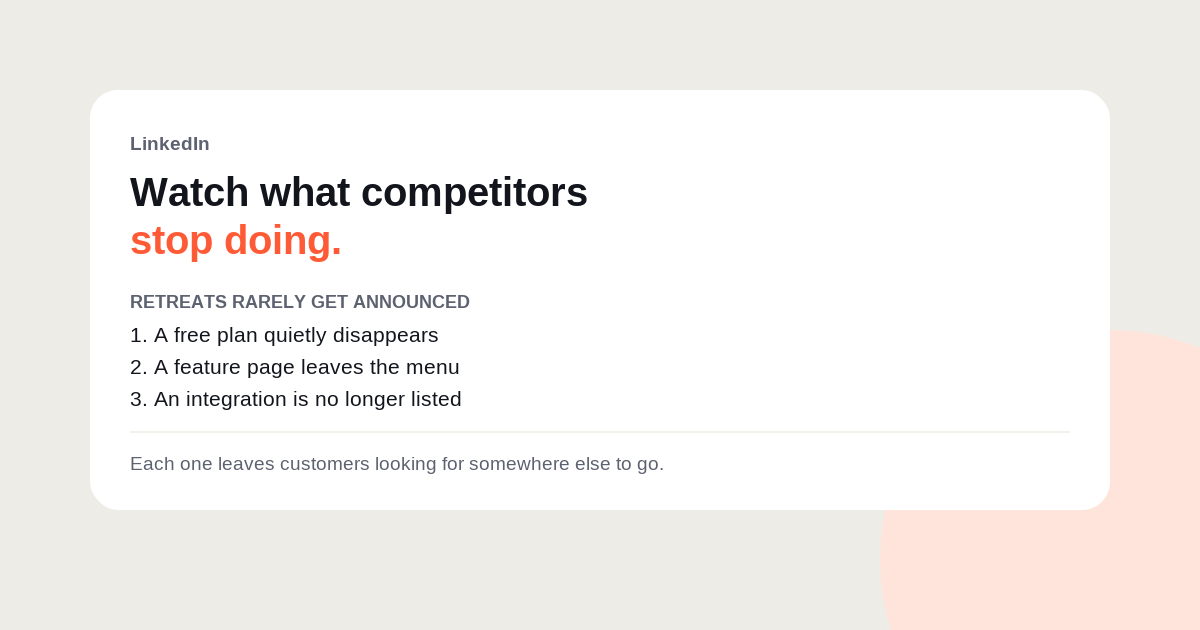
What competitors stop doing: the signal most teams miss
Competitor retreats rarely get announced: a free plan disappears, a feature page leaves the menu, an integration is delisted. Why they matter and how to spot them.
Read the post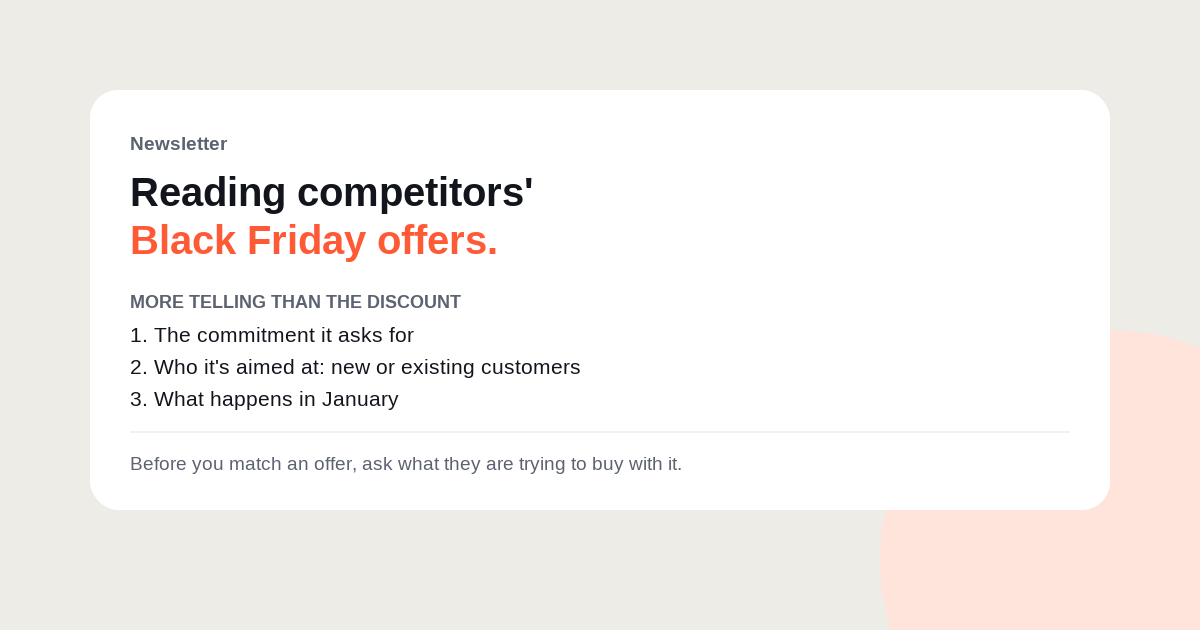 Newsletter · 1 min read
How to read competitors' Black Friday SaaS discounts
How to read a competitor's Black Friday discount: the commitment it asks for, who it targets and what happens in January, with two offers from our tracking.
 LinkedIn · 1 min read
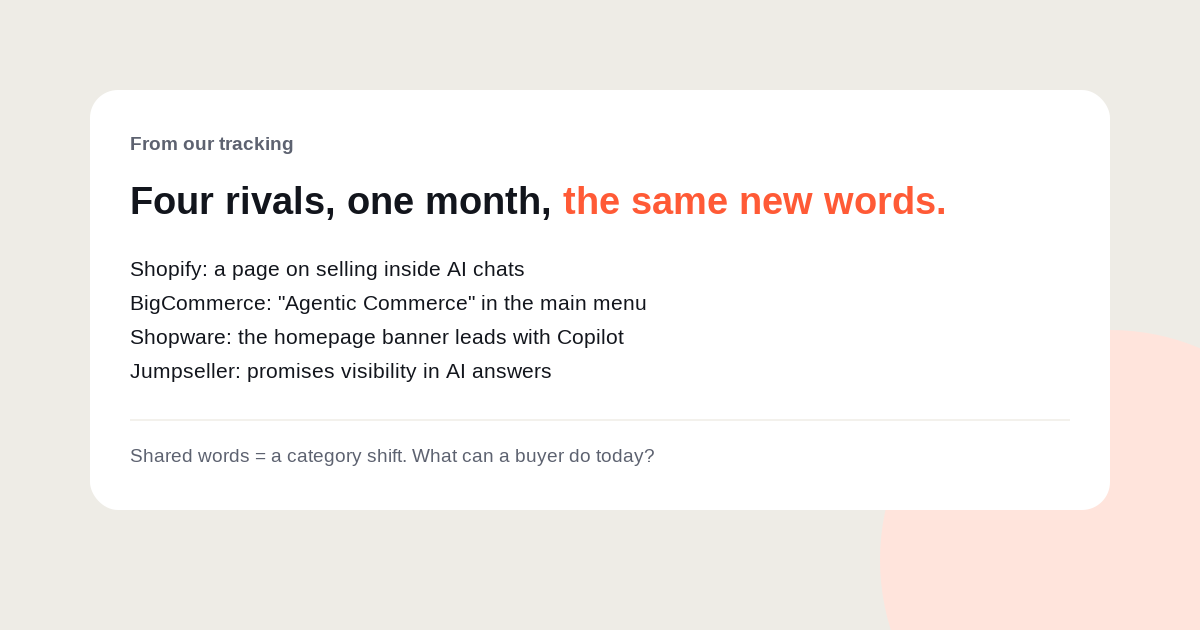
Competitor messaging: four rivals, the same new AI words
Four e-commerce platforms started using the same AI words within one month. Why that signals a category shift, and a 2-minute competitor messaging check.
 LinkedIn · 1 min read
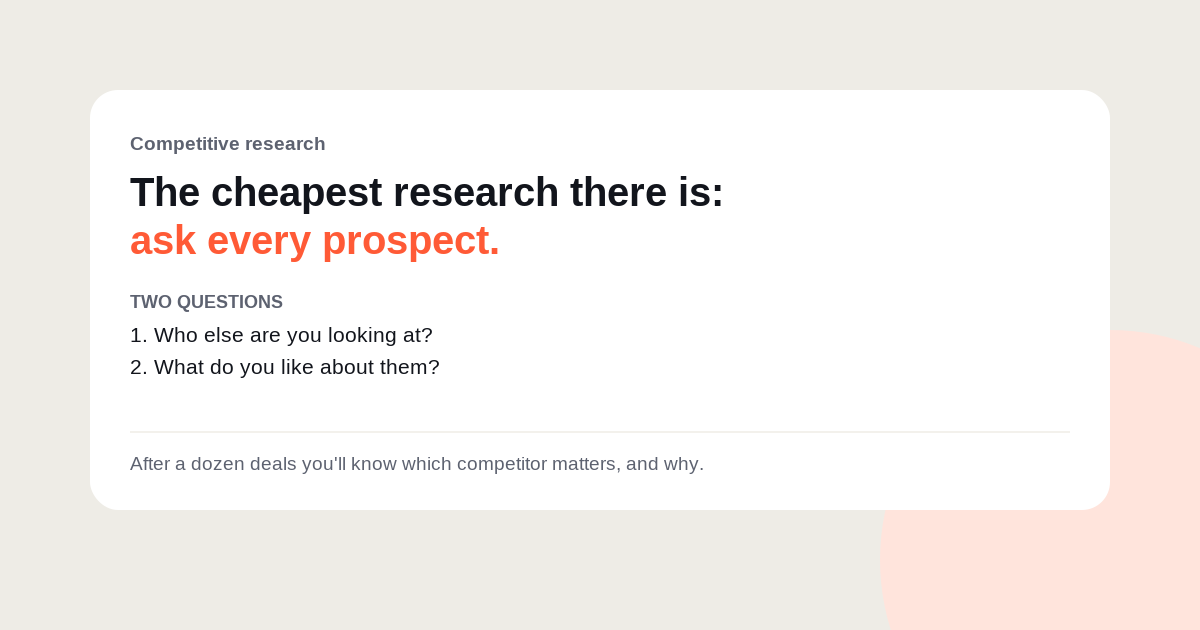
The cheapest competitive research for SaaS: ask every prospect
Ask every prospect who else they're looking at, then what they like about them. After a dozen deals you'll know which competitor matters in your deals, and why.
 Newsletter · 1 min read
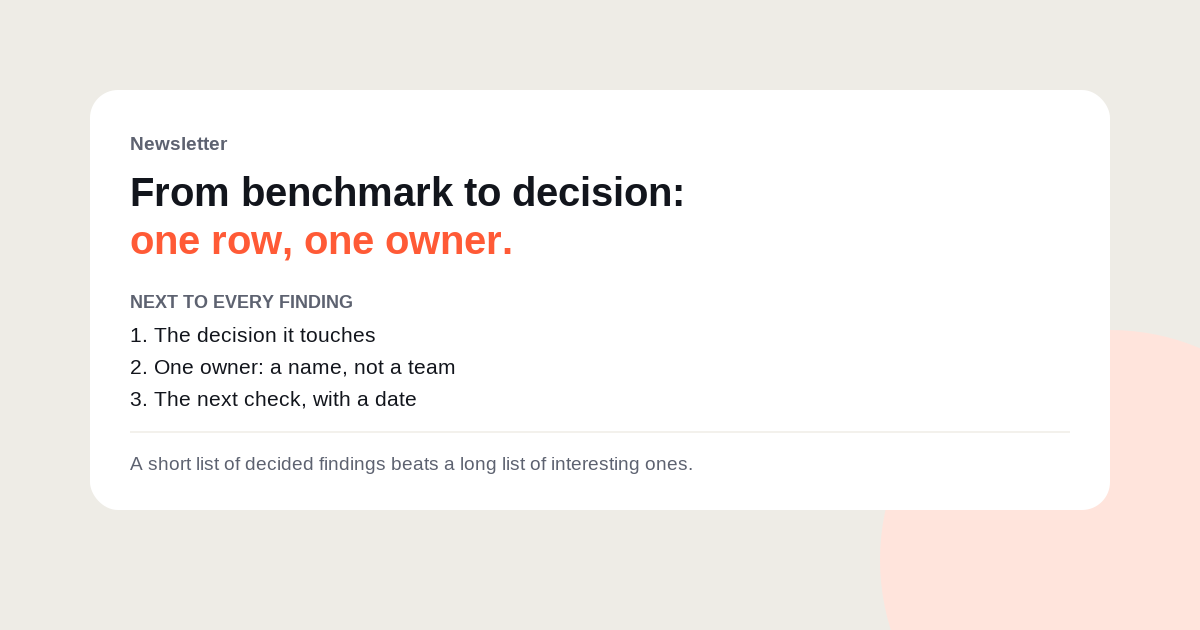
From competitive benchmark to decision: one row, one owner
Why most competitive benchmarks fail after the meeting, three things to write next to every finding, and a comparison table that still quotes an old price.
 LinkedIn · 1 min read
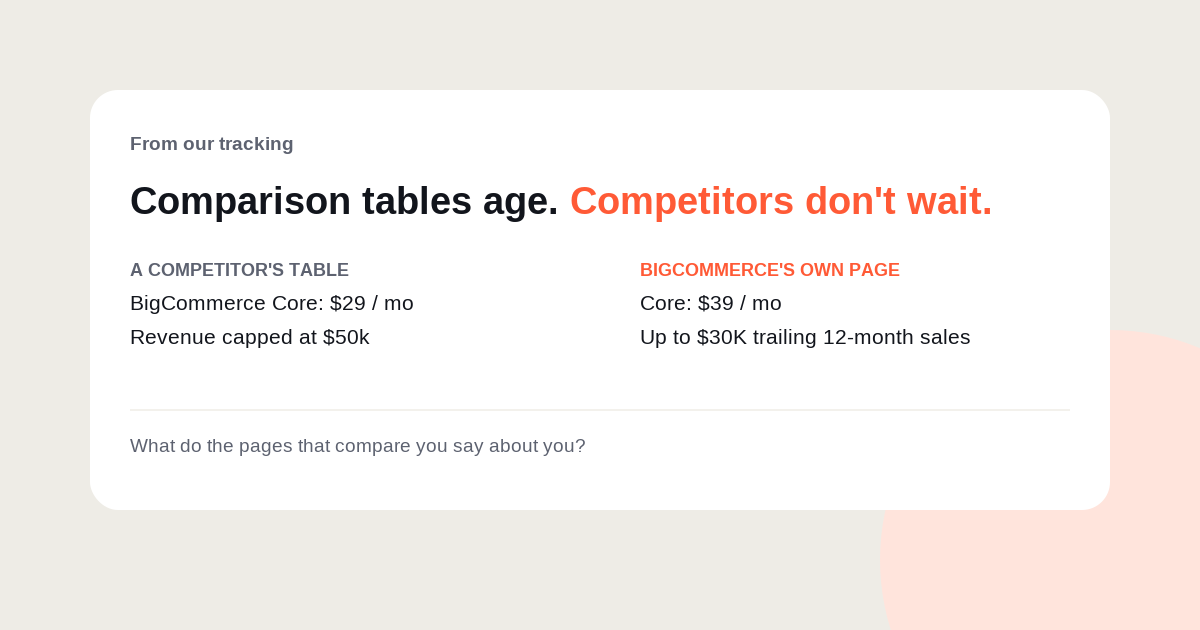
Competitor comparison tables age. Check yours in 2 minutes
A competitor's comparison table still lists another platform's old price and limit. Why buyers read those tables as fact, and a 2-minute check for your market.
 Newsletter · 2 min read
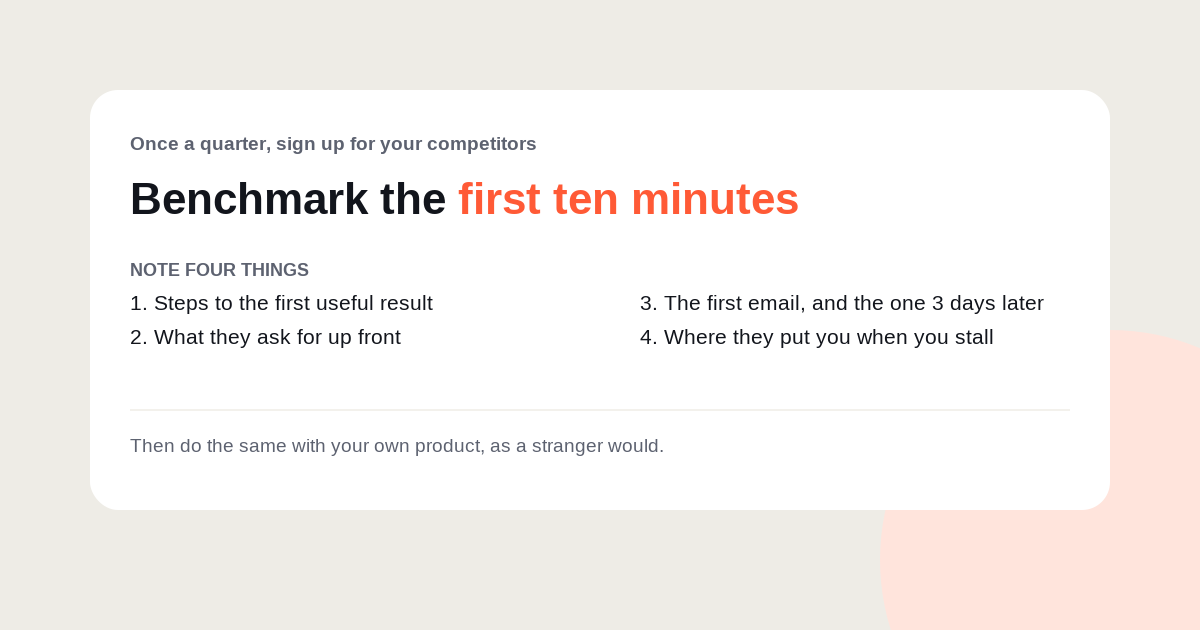
How to benchmark competitor onboarding: sign up yourself
Sign up for competitors' free trials once a quarter and note four things about their onboarding, plus a pricing page that changed four times in five weeks.
 Newsletter · 1 min read
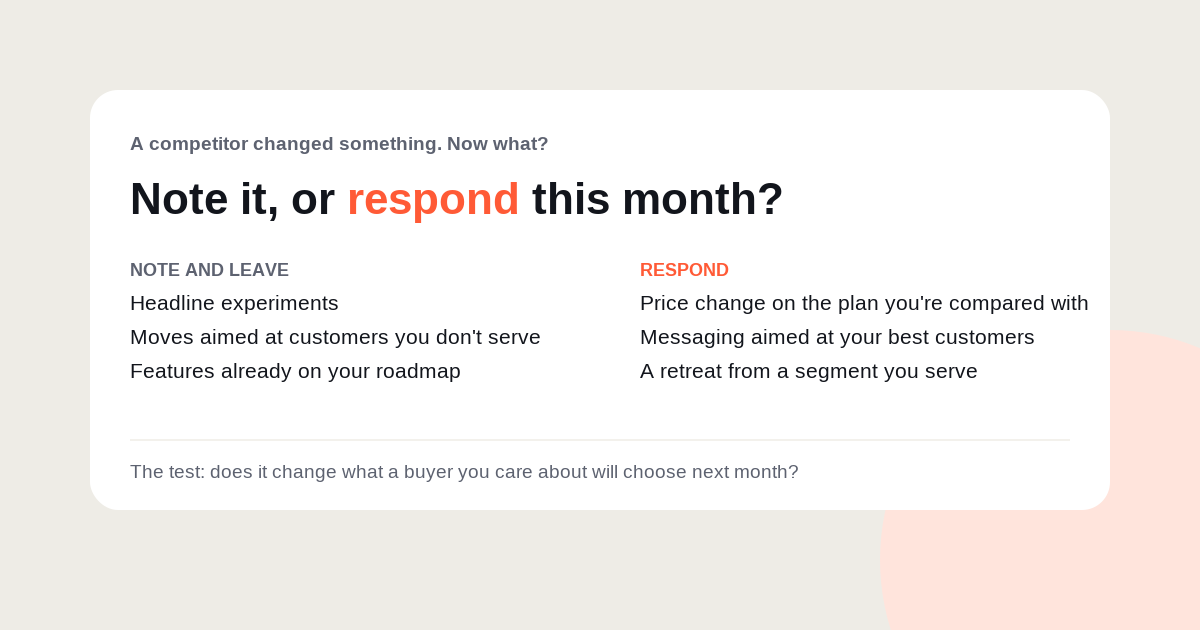
When to ignore a competitor's move, and when to respond
Most competitor changes deserve a note, not a response. Which moves to leave, which to answer this month, and a one-question test for every competitor change.
 LinkedIn · 1 min read
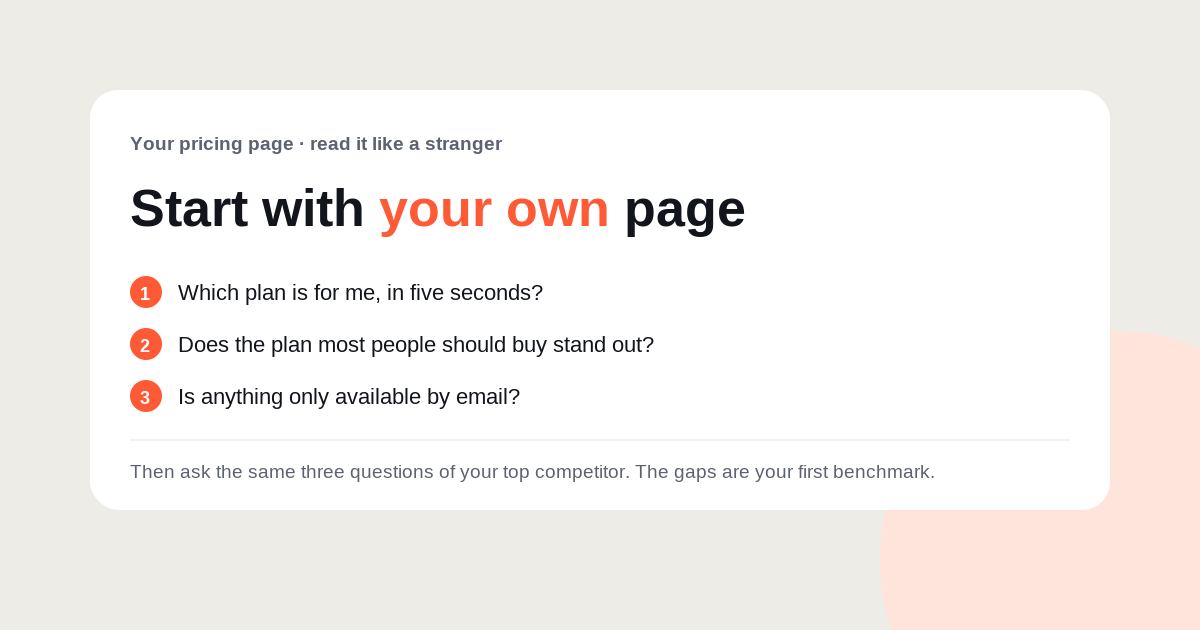
Benchmark your own SaaS pricing page before a competitor's
Before comparing a competitor's pricing page, read your own the way a stranger would. Three questions to ask of both pages, and gaps that cost nothing to fix.
 Newsletter · 1 min read
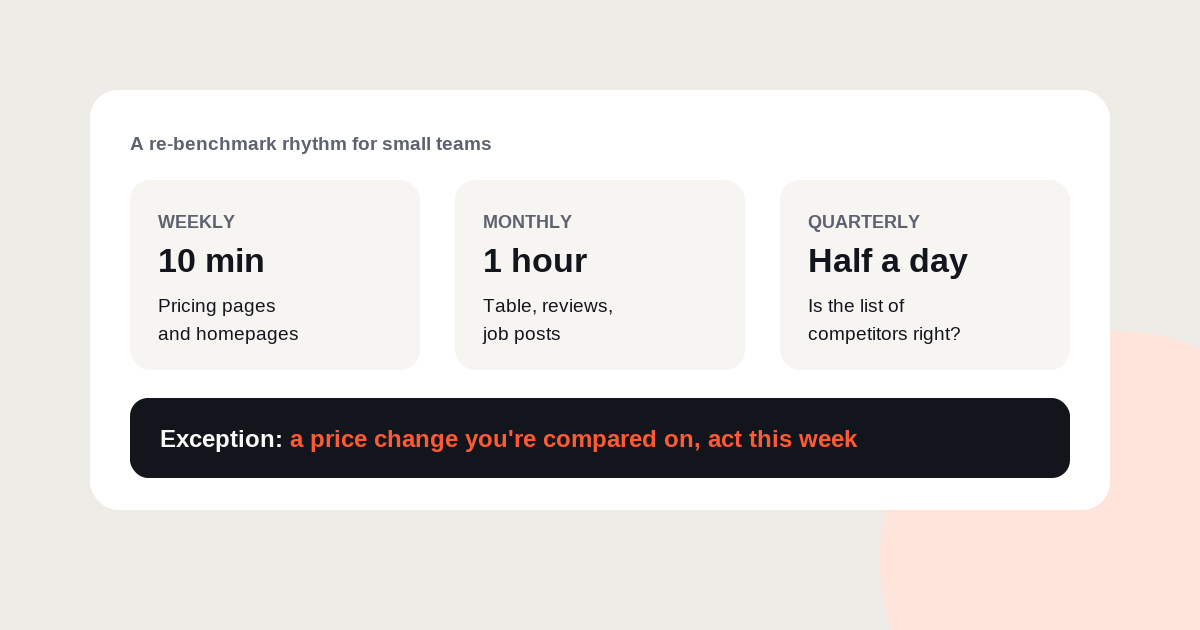
How often should you benchmark competitors? A simple rhythm
Less often than you fear, more often than you do: a weekly, monthly and quarterly rhythm for competitive benchmarking, and the one change that can't wait.
 LinkedIn · 1 min read
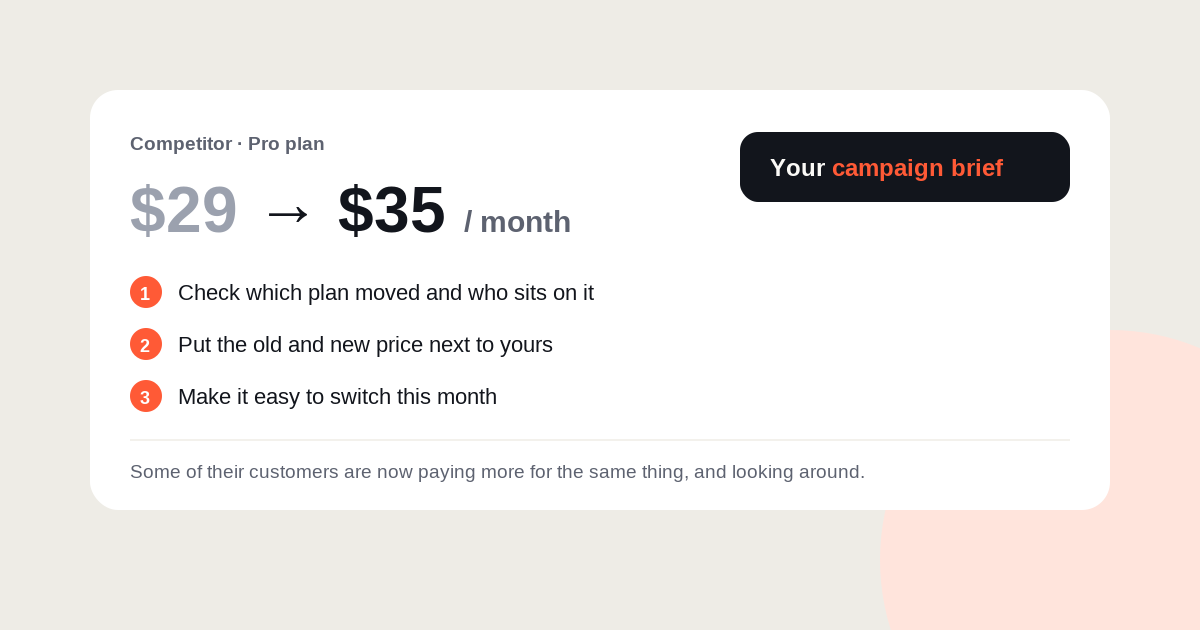
When a competitor raises prices: three things to do that week
When a competitor raises prices, some of their customers start looking around that month. Three things to do in the week it happens, from plan check to switch.
 Newsletter · 1 min read
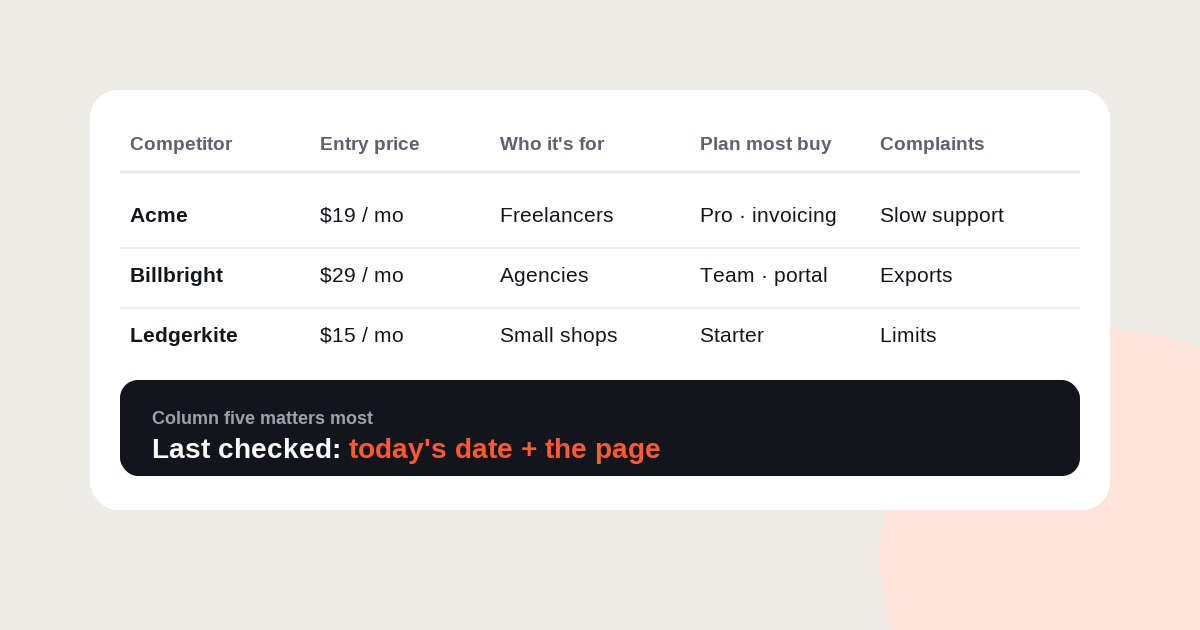
Competitive benchmarking table: five columns worth keeping
A competitor benchmark table nobody updates is worse than none. Five columns that cover most competitor decisions, and why the date column matters most of all.
 Newsletter · 1 min read
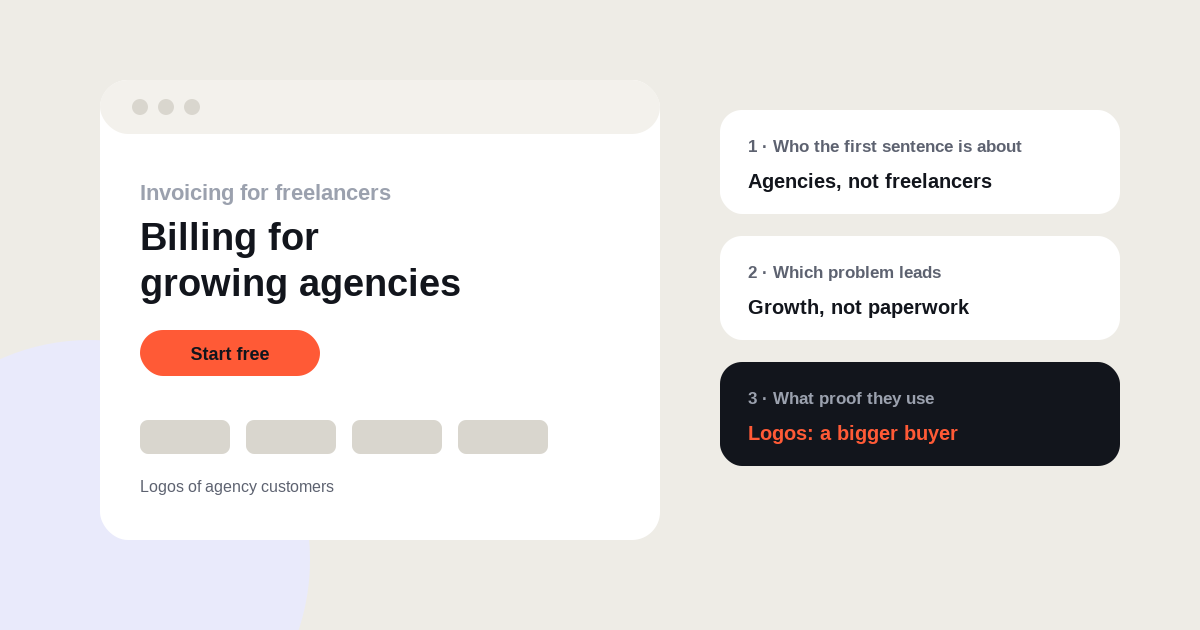
Competitor messaging benchmark: read a homepage like a memo
How to benchmark a competitor's homepage messaging against your own: who the first sentence is about, which problem leads, and what proof they use, every month.
 LinkedIn · 1 min read
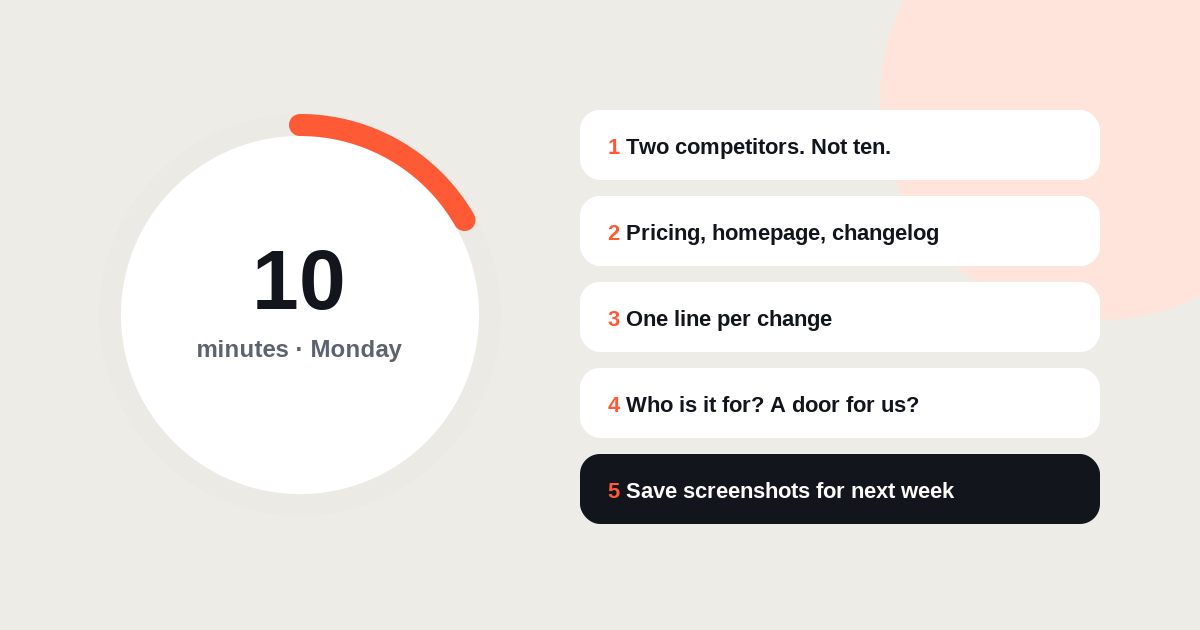
A 10-minute weekly competitor monitoring routine
Two competitors, three pages, one line per change. A ten-minute weekly competitor monitoring routine you can keep, so you see a move before your customers do.
 Newsletter · 1 min read
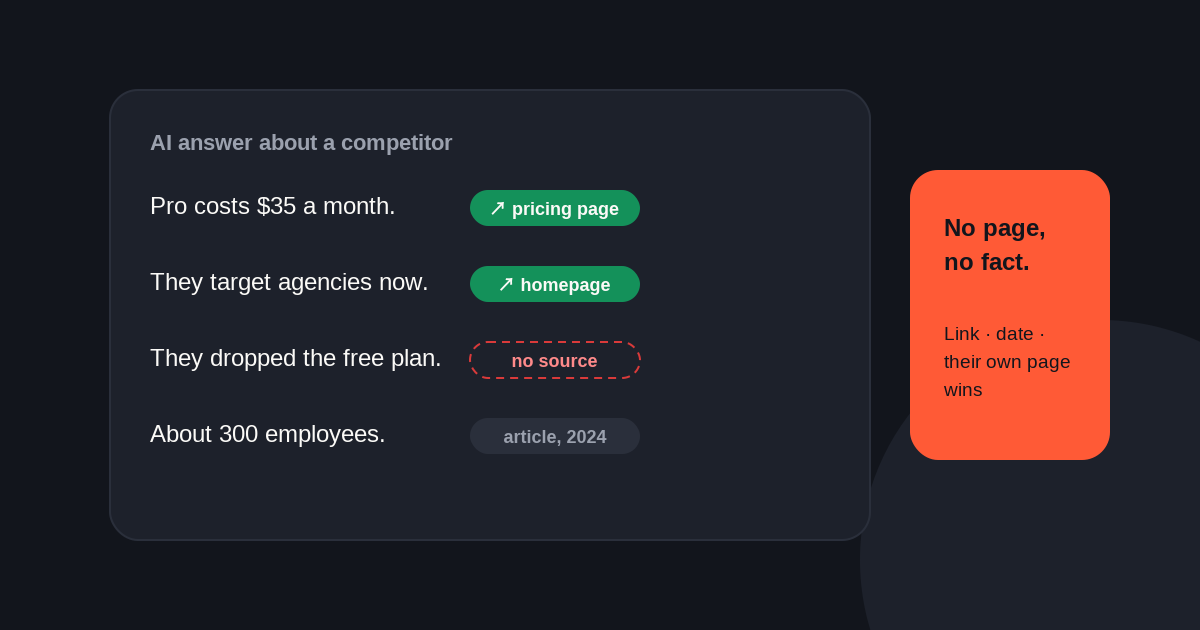
Using AI for competitor research: every claim needs a source
A competitive benchmark is only as good as its sources. Three habits for using AI tools in competitor research without repeating things that aren't true.
 LinkedIn · 1 min read
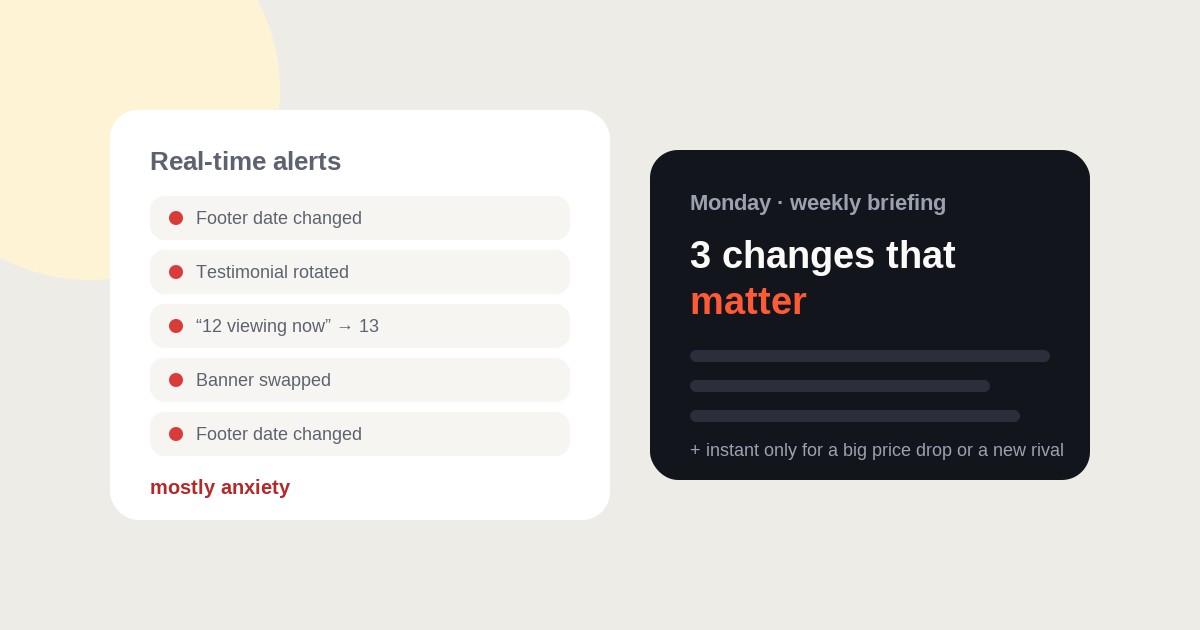
Weekly beats real-time competitor monitoring
You don't need to know about a competitor's change the minute it happens, only before it costs you a deal. Why a weekly look beats real-time monitoring.
 LinkedIn · 1 min read
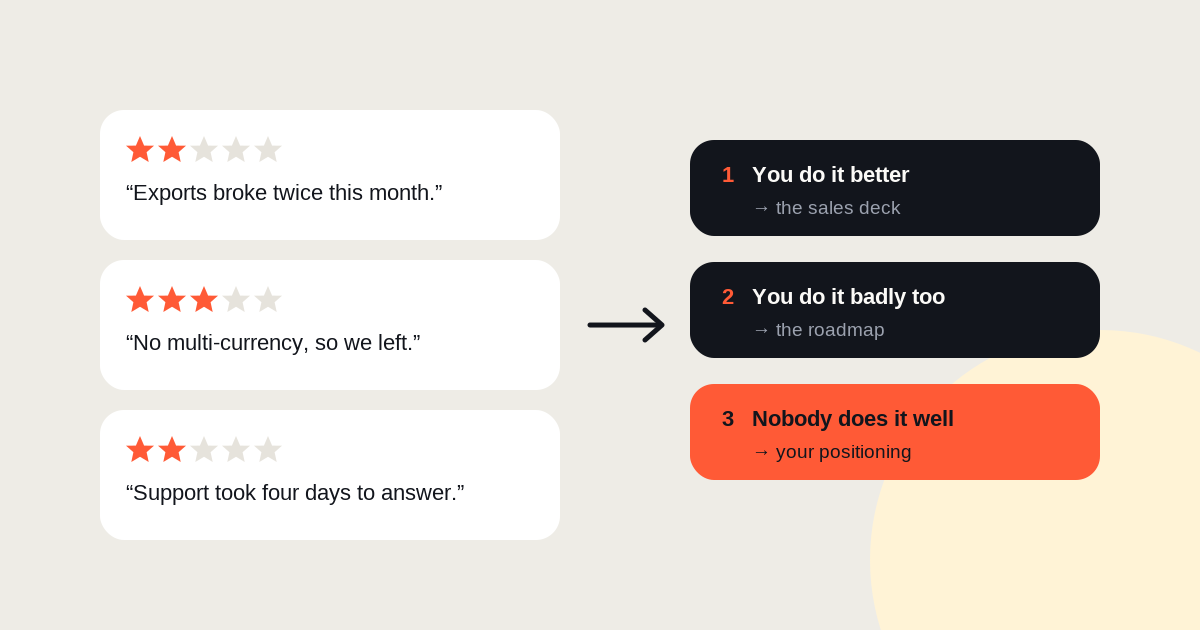
Your best sales script is in your competitor's 2-star reviews
Two- and three-star reviews say what broke, what was missing and what made someone leave. How to turn 20 of them into sales, roadmap and positioning decisions.
 LinkedIn · 1 min read
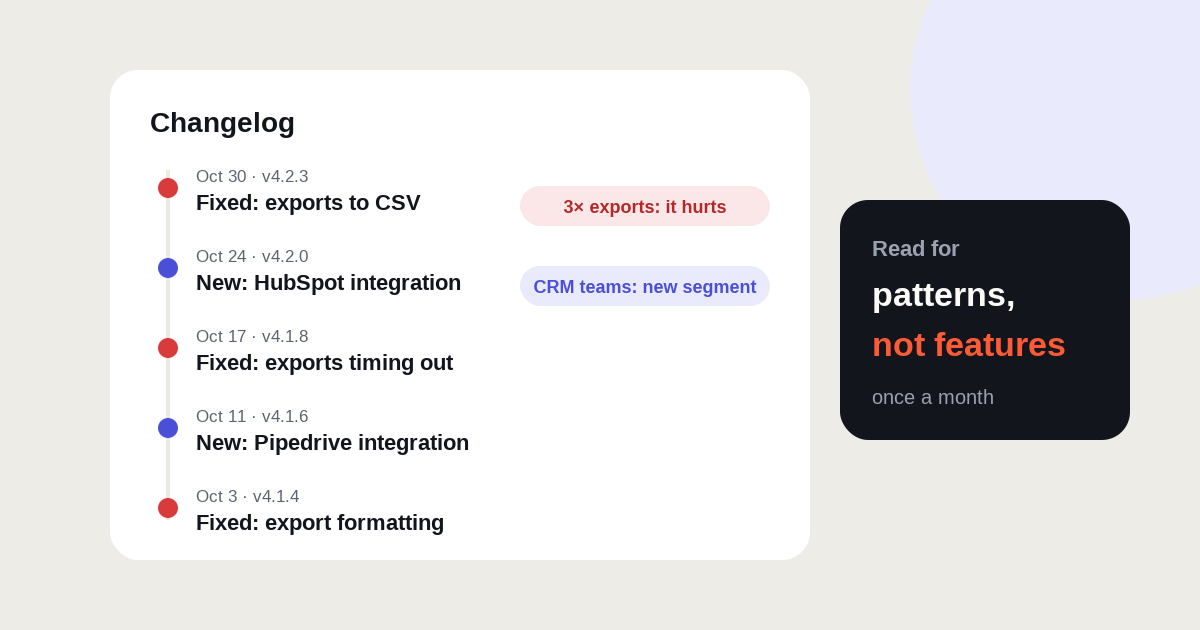
How to read a competitor's changelog: patterns, not features
A competitor's changelog is a public record of what their customers asked for. Four patterns that show where a competitor is going and where they're weak.
 Newsletter · 1 min read
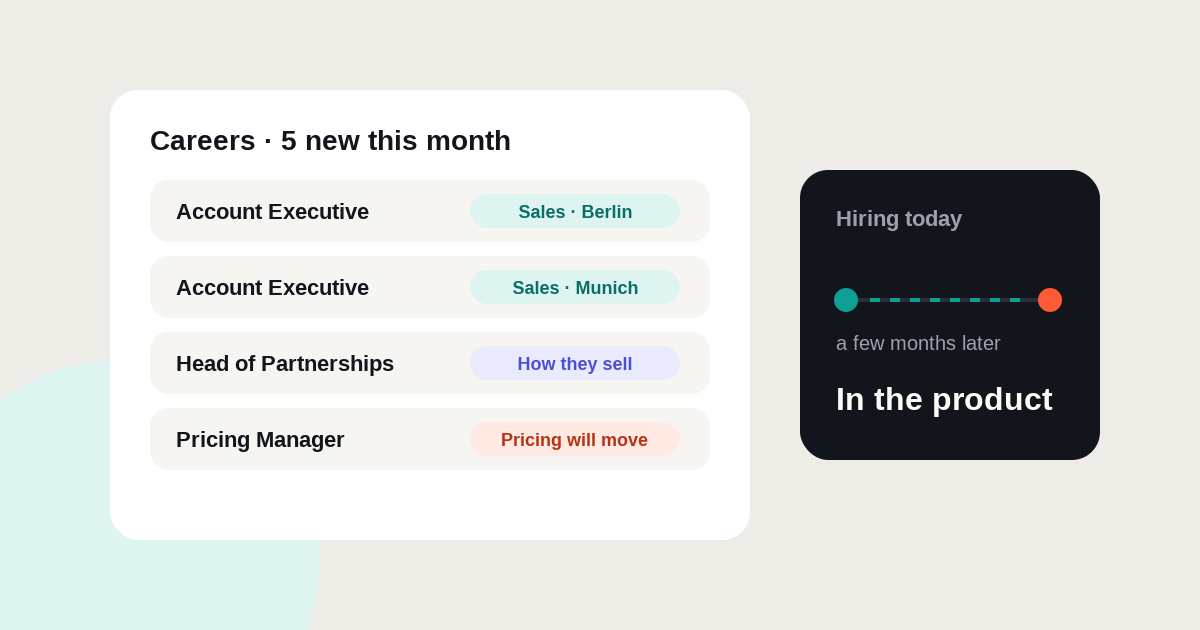
Competitor job posts are the most honest roadmap
A competitor's careers page shows what it is about to do months before the product does. Which job posts signal a move, what to watch and how often to check.
 LinkedIn · 1 min read
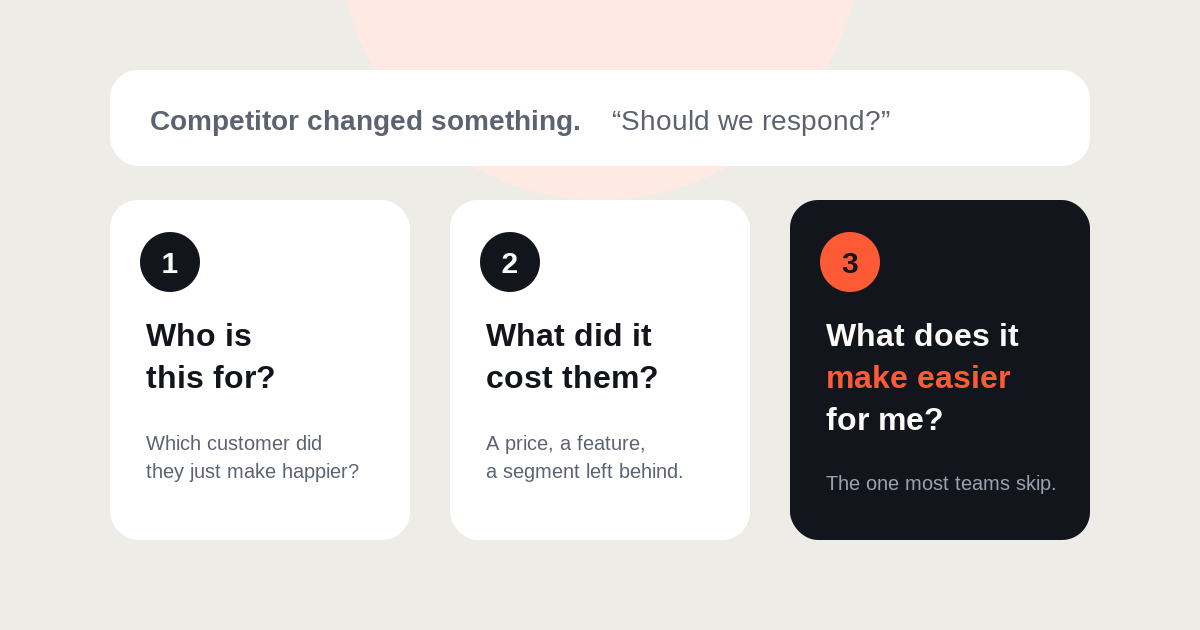
Three questions to ask about every competitor move
"Should we respond?" usually leads to copying. Three better questions to ask when a competitor moves, and the one that turns watching into a decision.
 Newsletter · 1 min read
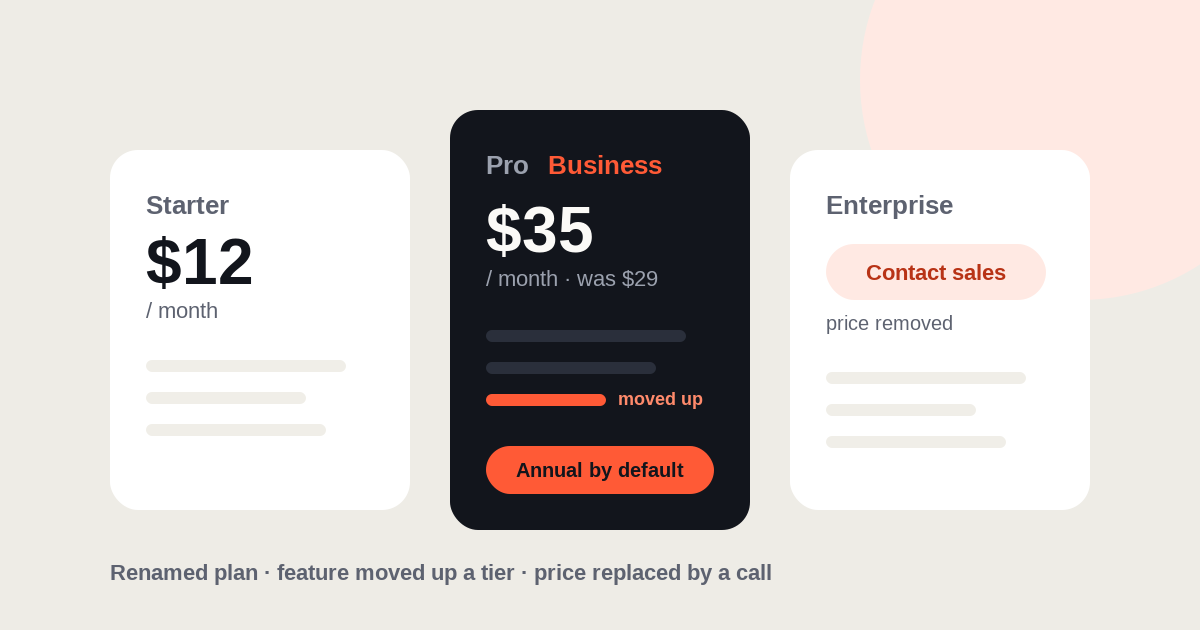
Your competitor’s pricing page is a strategy memo
Benchmarking competitor pricing: the moves are in everything around the numbers. Five pricing page changes that are decisions, and a 10-minute weekly habit.
 LinkedIn · 1 min read
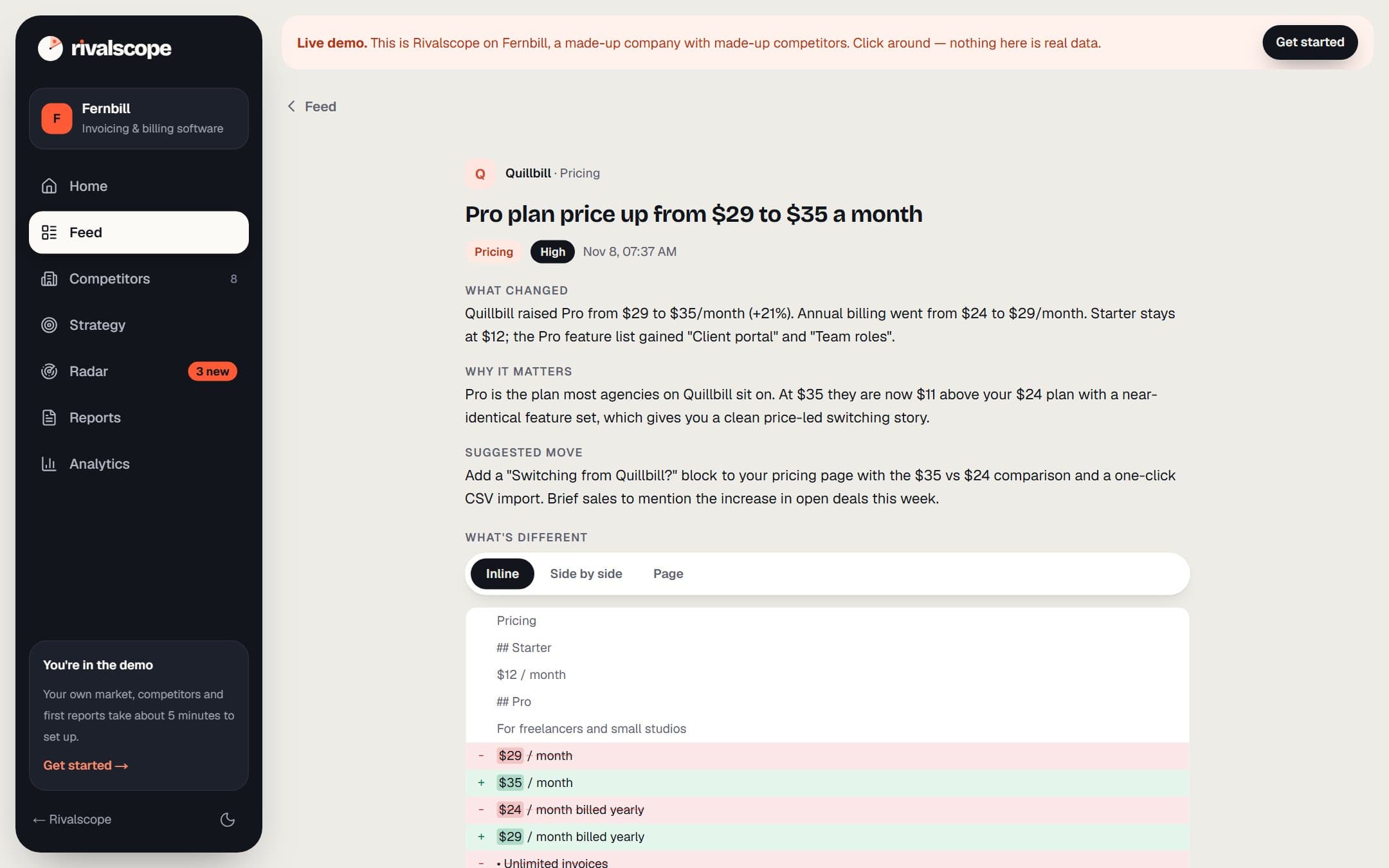
Catching a competitor's price rise the next morning
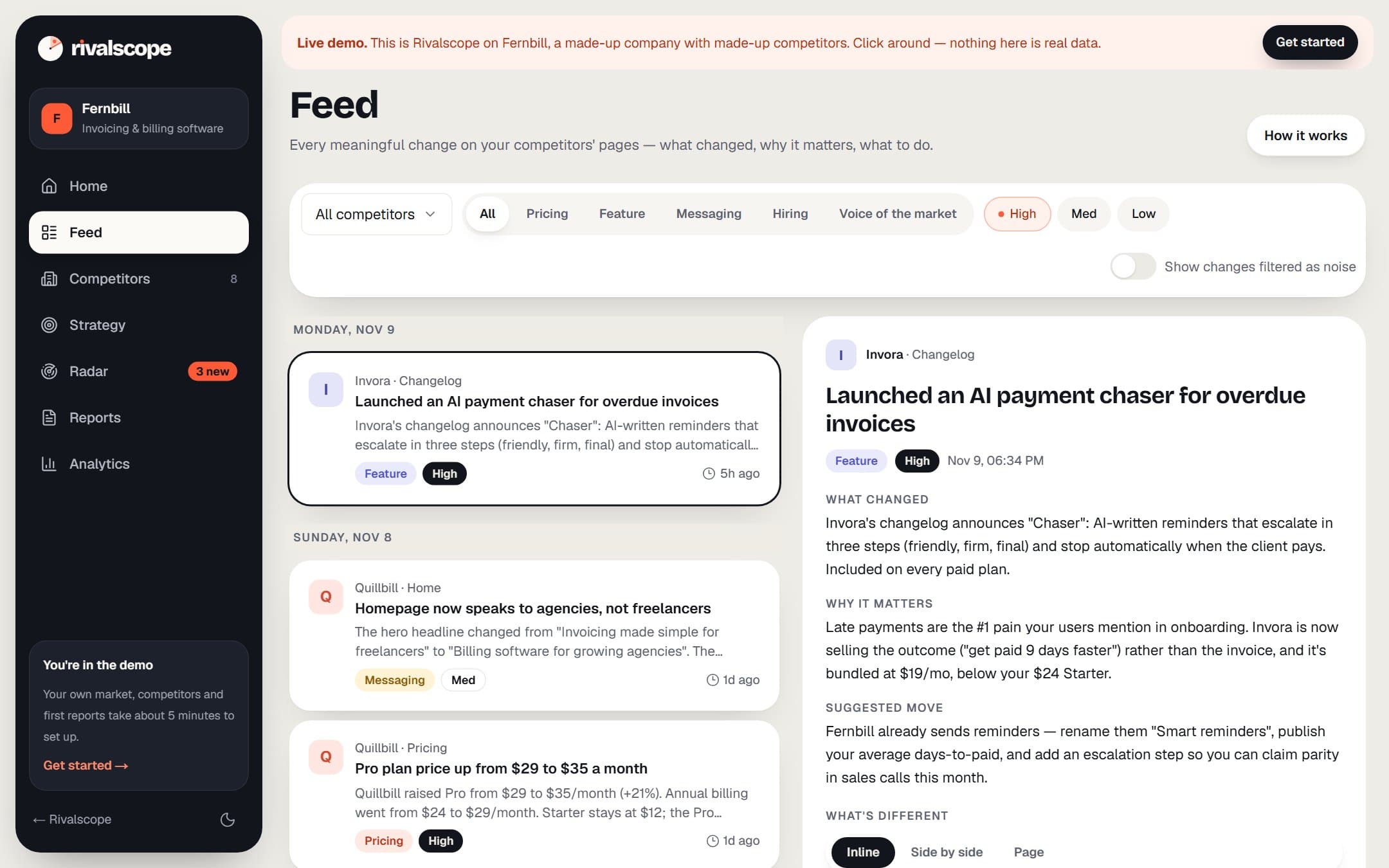
A competitor raised their Pro plan from $29 to $35 overnight. How long until you'd notice? A walk-through of price tracking in Rivalscope's live demo.
 LinkedIn · 1 min read
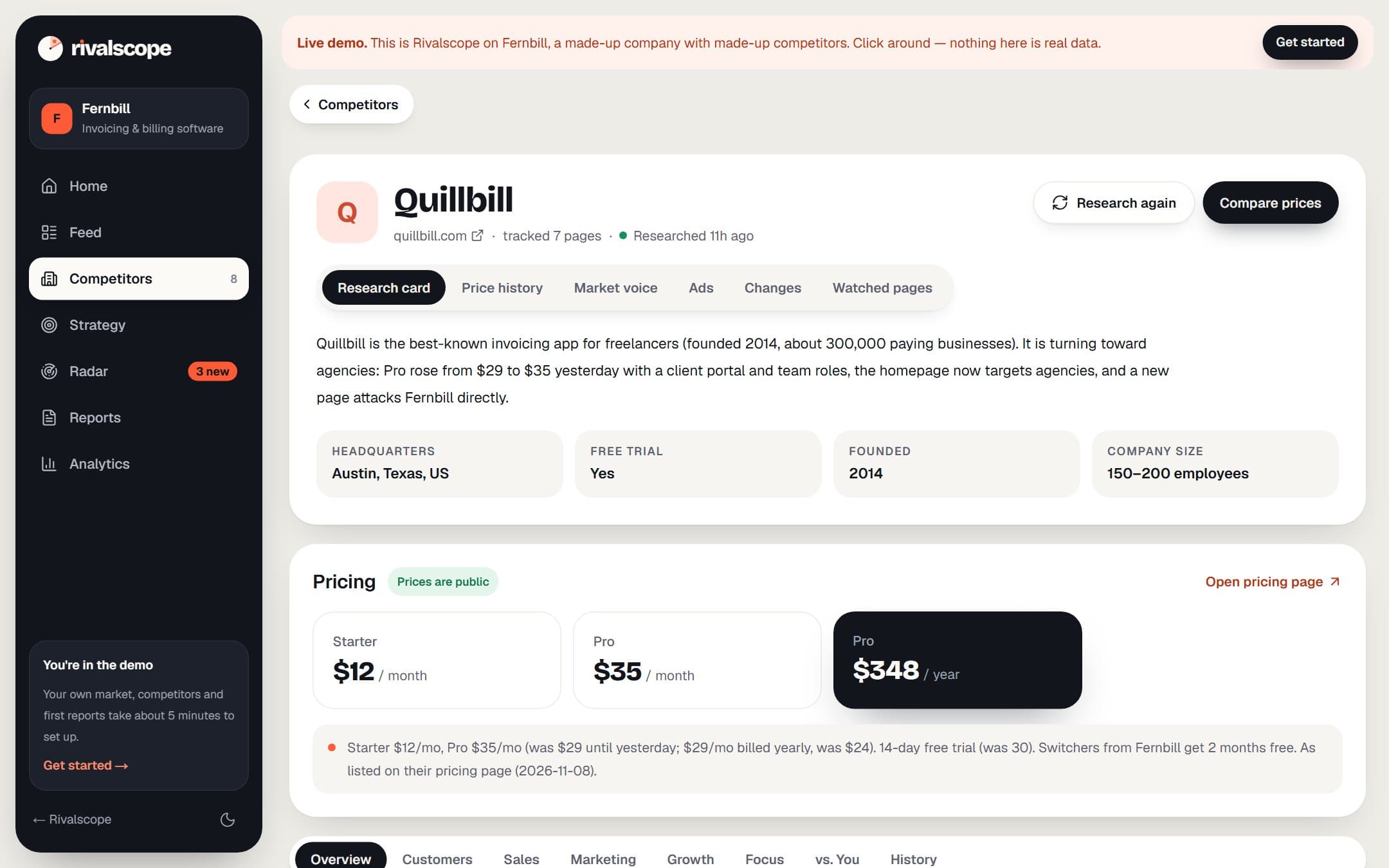
Competitor strategy cards: every claim with its source
Every competitor in Rivalscope gets a strategy card: who they sell to, how they price, what they emphasise, with each point linked to the page it came from.
 Newsletter · 1 min read
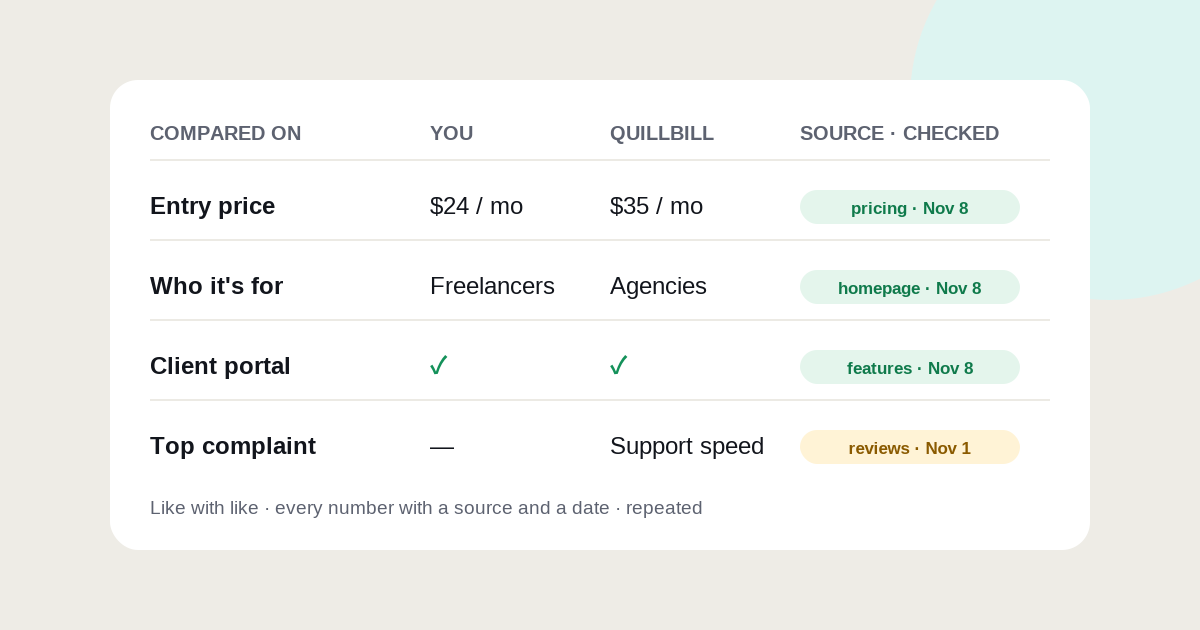
What is competitive benchmarking, and why most teams skip it
Competitive benchmarking compares you with the companies your customers compare you with. What makes a benchmark useful, and why most die in a spreadsheet.
 LinkedIn · 1 min read
Competitor monitoring: why silence is a feature
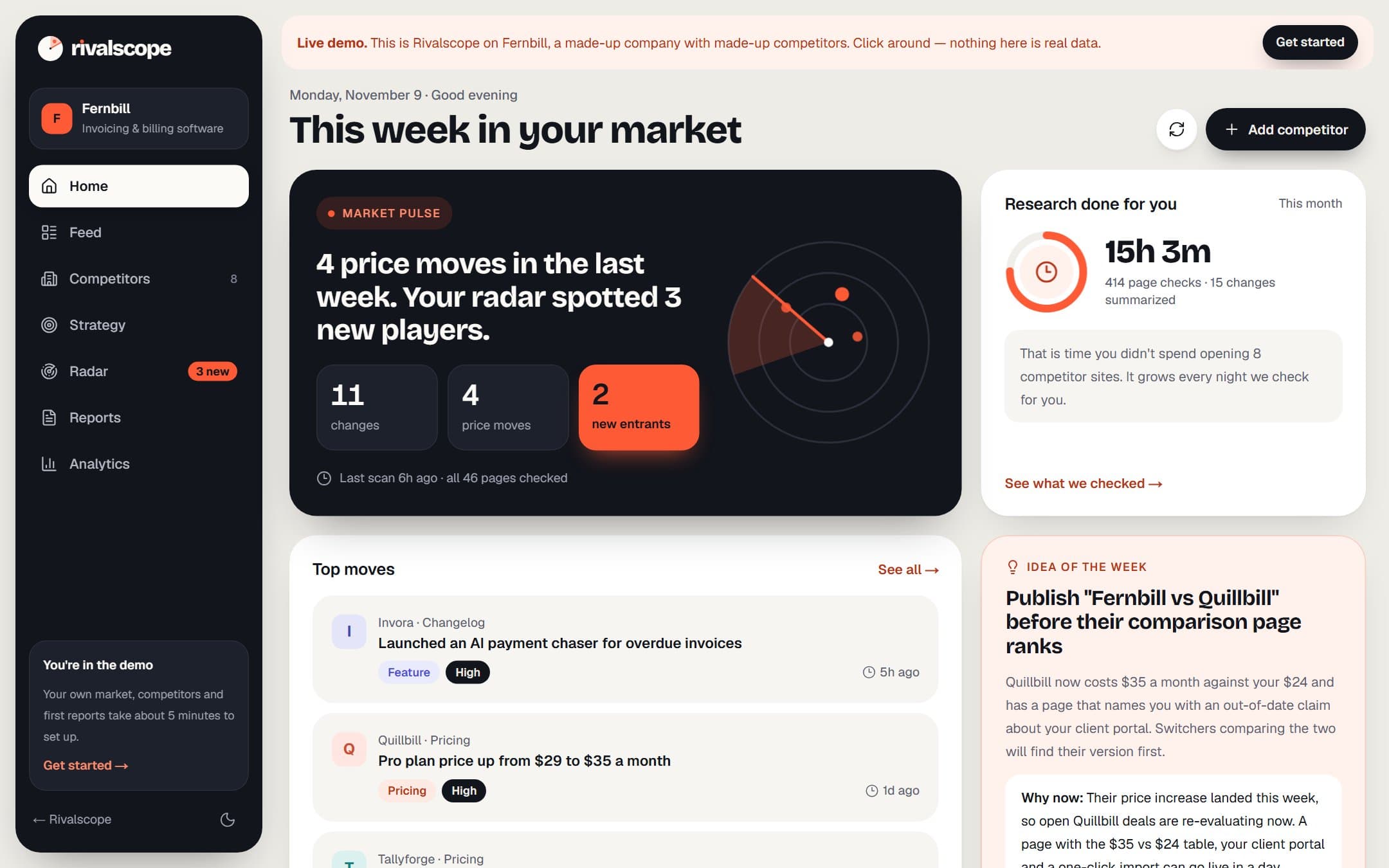
The first version of Rivalscope flagged everything. Why the real work in competitor monitoring wasn't detecting change, but deciding what not to tell you.
 LinkedIn · 1 min read
What Rivalscope does every night to track competitors
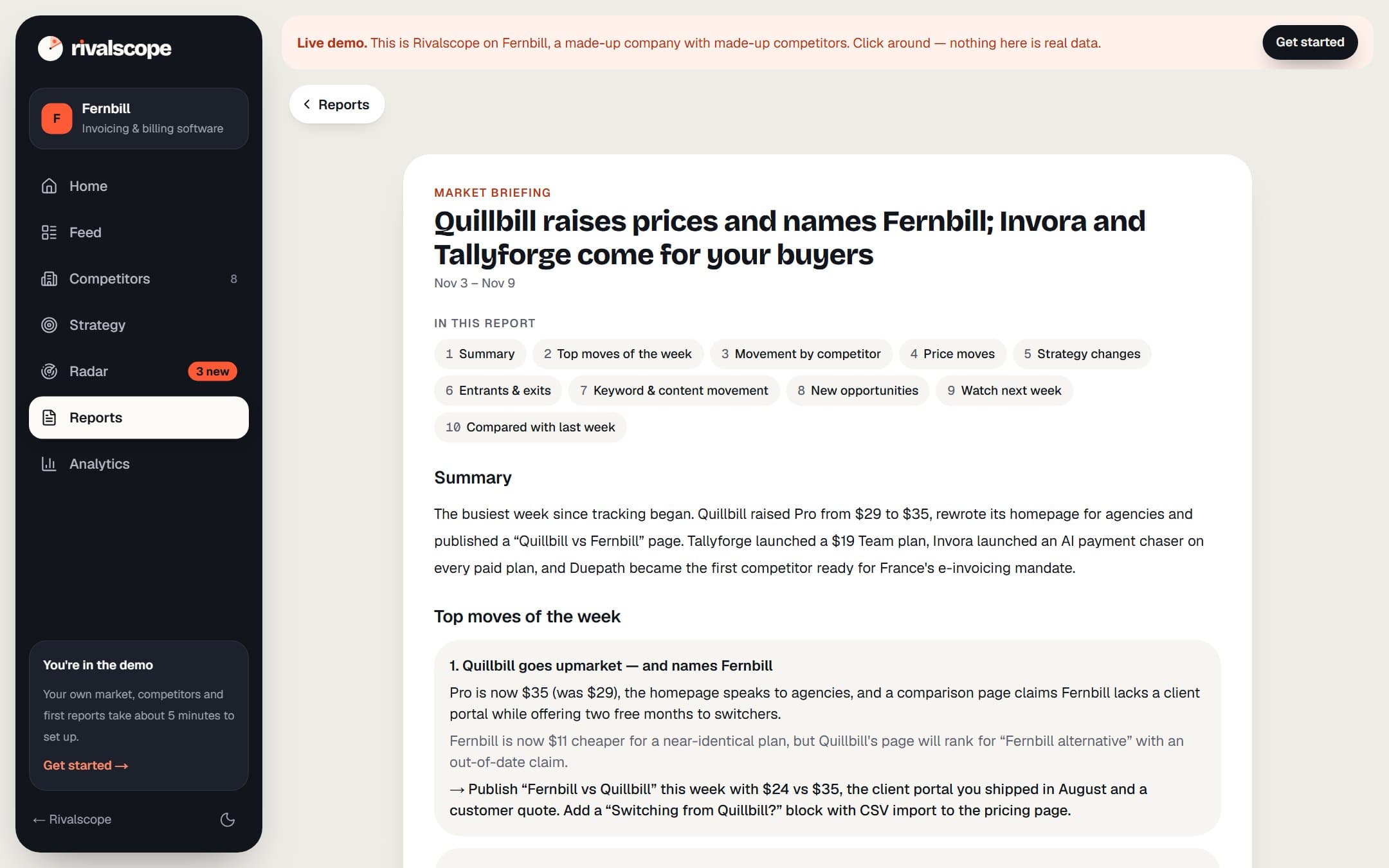
Four steps, every night: open your competitors' pages, compare them with yesterday, throw away the noise, and write down what changed and what to do about it.
 LinkedIn · 1 min read
Why we're building Rivalscope
Most SaaS teams find out about a competitor's price change from a prospect. Why we're building Rivalscope: daily competitor tracking that says what changed.
Let Rivalscope do the watching
Your competitors’ pricing, positioning, ads, hiring and reviews, read every day. One short email when something matters, with what to do about it.