Competitive benchmarking table: five columns worth keeping
A competitor benchmark table nobody updates is worse than none. Five columns that cover most competitor decisions, and why the date column matters most of all.
First published on our newsletter on Substack on .
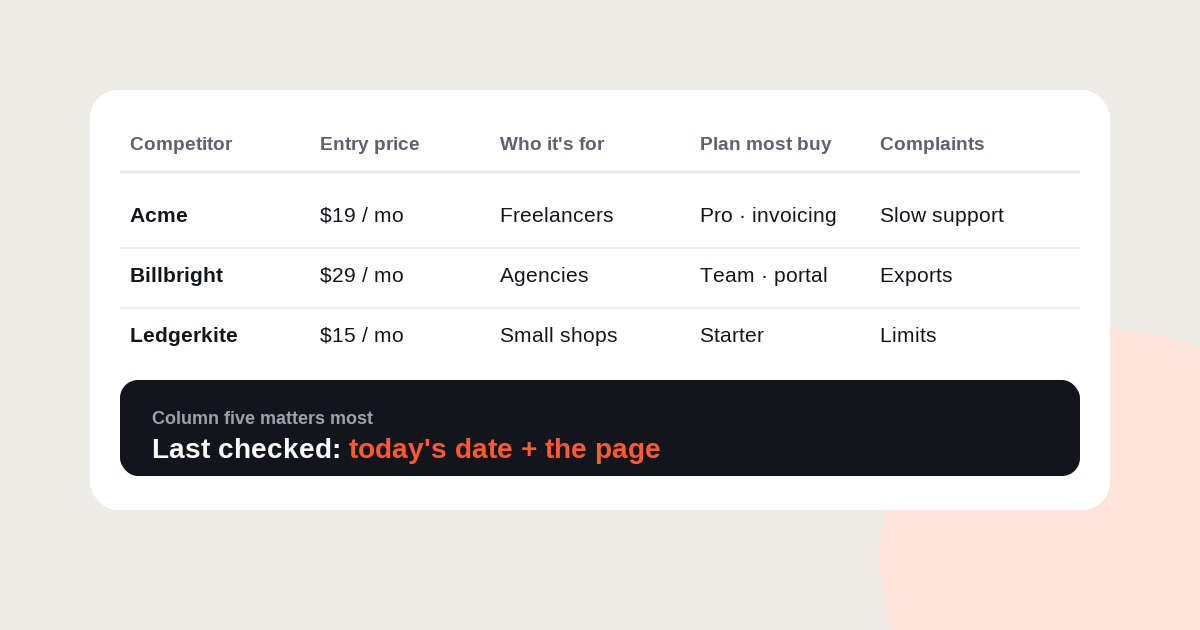
A competitive benchmarking table needs five columns: entry price, who it's for, the plan most people buy, what customers complain about, and the date it was last checked. The usual competitor spreadsheet has thirty columns and was last updated before the current pricing page existed. A smaller table that stays current is worth more.
Which five columns should a benchmark table have?
Five columns cover most decisions:
- Entry price: the cheapest paid plan, monthly, in one currency.
- Who it’s for: the customer in their headline, in their words.
- The plan most people buy, and what it includes that the plan below doesn’t.
- What customers complain about: the top theme from their recent critical reviews.
- Last checked: the date, and the page you checked.
Why does the date column matter most?
Without a date, nobody knows whether a number is from this month or from the pitch deck two years ago, and the table stops being trusted.
How many competitors should the table include?
Keep it to your top three to five competitors. Add a row only when a new company shows up in your deals twice.
Frequently asked questions
How many competitors should a benchmark table cover?
Your top three to five. Add a row only when a new company shows up in your deals twice.
Why does a competitor benchmark table need a 'last checked' date?
Without a date, nobody knows whether a number is from this month or from a pitch deck two years ago, and the table stops being trusted.
New notes like this go out on LinkedIn first. Follow Rivalscope on LinkedIn.