When to ignore a competitor's move, and when to respond
Most competitor changes deserve a note, not a response. Which moves to leave, which to answer this month, and a one-question test for every competitor change.
First published on our newsletter on Substack on .
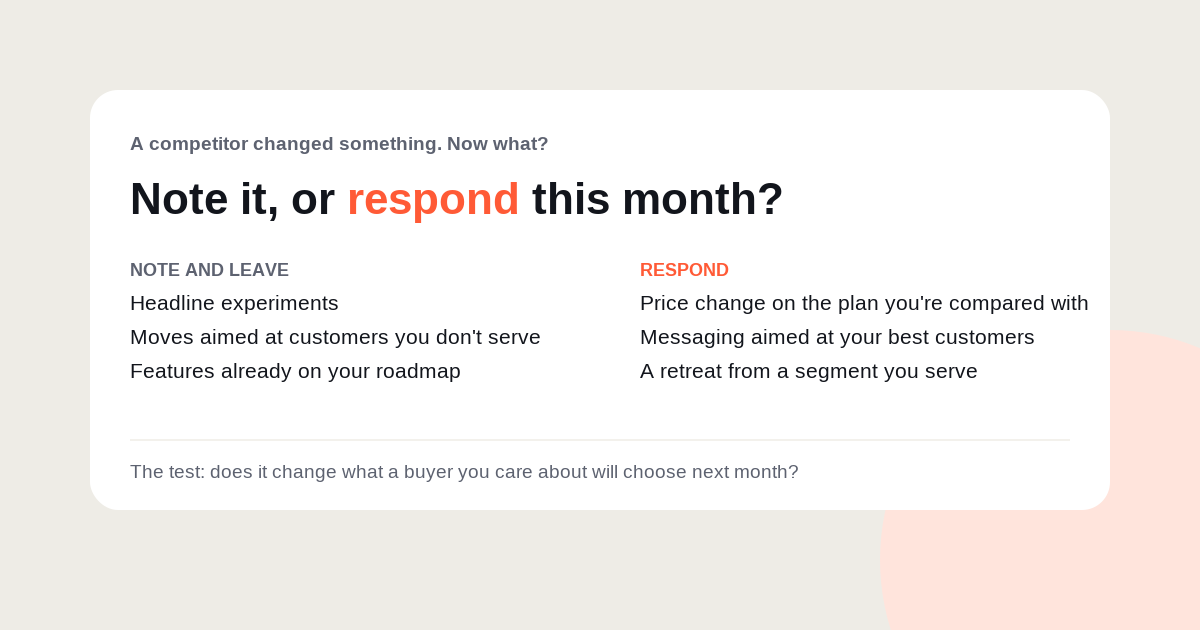
Ignore a competitor's move when it doesn't change what a buyer you care about will choose next month; respond when it does. A good benchmark makes you notice more. That's useful only if you also get better at deciding what to ignore.
Which competitor moves can you ignore?
Some moves are safe to note and leave:
- Copy experiments: a headline that changes and changes back within weeks.
- Moves aimed at a customer you don't serve: an enterprise tier when you sell to five-person teams.
- Features you'd build anyway, on your own roadmap and timeline.
Which competitor moves deserve a response?
Some deserve a response this month:
- A price change on the plan you're compared with.
- A message aimed straight at your best customers.
- A competitor retreating from a segment you serve: their customers are looking now.
What is the one-question test?
The test is simple: does this change what a buyer you care about will choose next month? If not, write it down and move on. Most weeks, that's the right answer.
Frequently asked questions
Should you respond to every competitor change?
No. Most competitor changes deserve a note, not a response. If a change doesn't affect what a buyer you care about will choose next month, write it down and move on.
Which competitor changes need a response this month?
A price change on the plan you're compared with, a message aimed straight at your best customers, or a competitor retreating from a segment you serve.
New notes like this go out on LinkedIn first. Follow Rivalscope on LinkedIn.