Using AI for competitor research: every claim needs a source
A competitive benchmark is only as good as its sources. Three habits for using AI tools in competitor research without repeating things that aren't true.
First published on our newsletter on Substack on .
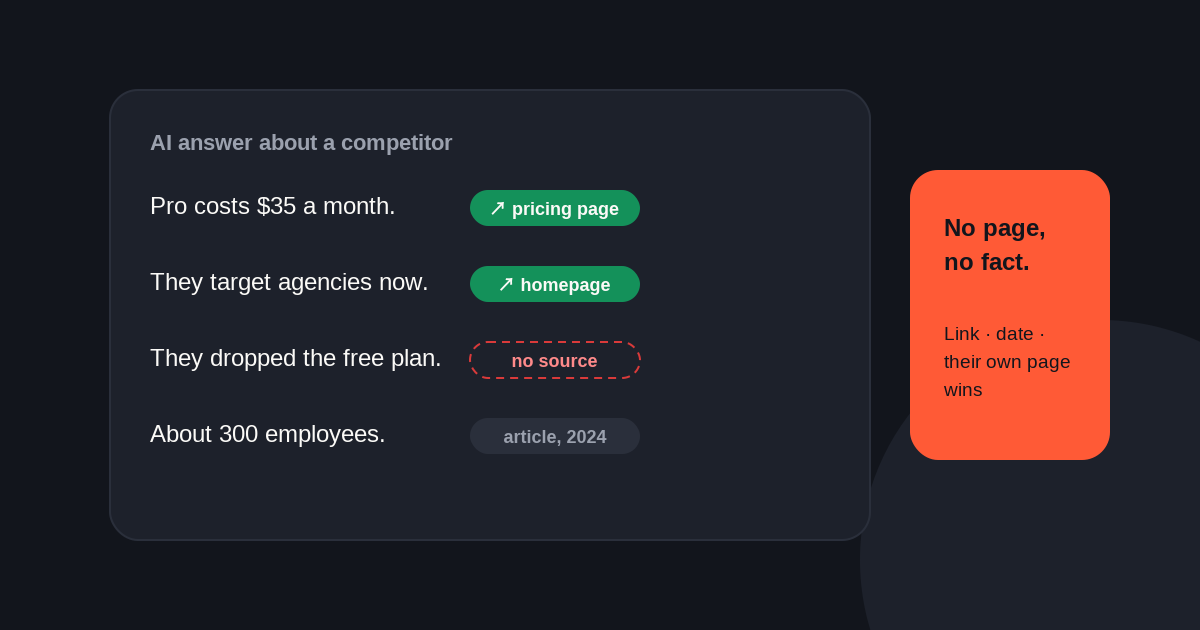
When you use AI for competitor research, treat every claim without a source you can open and check as a hypothesis, not a fact. An AI summary without a source is a guess with good grammar.
Why are AI summaries risky for competitive research?
When you ask an AI tool about a competitor, you get a confident paragraph back. Some of it came from the company’s own website last week. Some of it came from an old article. Some of it was filled in because it sounded right. The paragraph doesn’t tell you which is which.
For competitive research that difference is everything. If a sales rep repeats “they dropped their free plan” on a call and it isn’t true, you’ve lost more than the deal.
The rule I’ve settled on: every claim about a competitor needs a source next to it, a page you can open and check. If there’s no page, it’s a hypothesis, not a fact.
Which three habits keep AI competitor research accurate?
- Ask for the link with every claim, and open the ones that matter.
- Check the date: a pricing page from two years ago is history, not news.
- When two sources disagree, trust the competitor’s own current page over anyone writing about it.
It’s slower. It’s also the difference between research you can repeat on a sales call and research that quietly embarrasses you.
Frequently asked questions
Can you trust an AI summary about a competitor?
Only the claims that come with a source you can open and check. Without a page behind it, a claim is a hypothesis, not a fact.
Which source wins when two sources about a competitor disagree?
The competitor's own current page, over anyone writing about it.
New notes like this go out on LinkedIn first. Follow Rivalscope on LinkedIn.